
SCA in deep

Technology
Sortcell analytica has developed the SCAchipTM : a microfluidic-based device for isolating viable CTCs. Once isolated, they can be analyzed in a variety of ways, such as by studying their morphology or their genetics. And all this in a non-invasive procedure by taking a sample from peripheral blood.
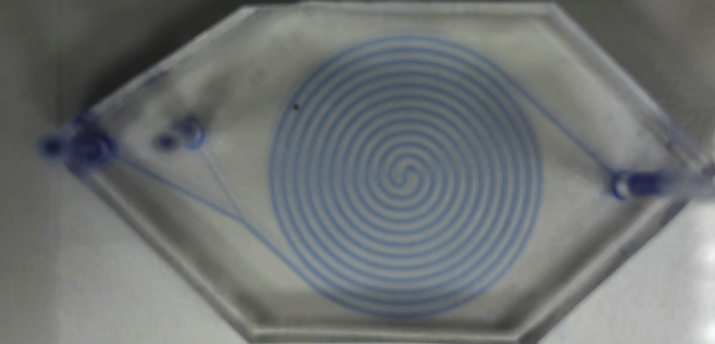

The SCAchipTM is designed to fit into the SCA-1TM instrument, a fully integrated system that can process a blood sample in less than 3 hours. This allows the sorted, viable CTCs to be used for downstream analysis. In addition, our SCAchipTM is designed to potentially work with any type of tumor because it is based on the principle of equilibrium between buoyancy and Dean forces, which is different from most other systems that classify particles by filtration. In our method, cells flow freely over the entire chip without being damaged.
The SCA-1TM system represents an innovative liquid biopsy technology of the future, requiring just a simple peripheral blood draw to capture and preserve circulating tumor cells (CTCs) in their intact and viable form. Unlike ctDNA analysis, which predominantly focuses on DNA examination and dominates the liquid biopsy industry, this technology offers a wide array of applications that are poised to revolutionize the approach of clinicians toward treating various types of solid tumors. The rationale behind this shift is straightforward: viable CTCs offer a wealth of parameters that can be harnessed for diverse purposes, providing a comprehensive understanding of cancer:

Personalized Treatment
This can be achieved by studying the DNA of these cells or by cultivating them to evaluate the efficacy of multiple drugs.
Recurrence Detection
Thanks to the non-invasive nature of obtaining blood samples, this system enables the frequent monitoring necessary for early detection of recurrences.
Early Detection
In accordance with the World Health Organization’s (WHO) recommendation, early detection is the most effective strategy for successful cancer control. Implementing screening tests for a wide spectrum of cancers is vital in meeting this imperative need.
Benefits of Sortcell Analytica technology
The SCAchipTM operates by capturing circulating tumor cells (CTCs) based on their size and deformability, a method shared by many other systems available in the current market. However, what sets it apart is its unique methodology. While most of the liquid biopsy industry has concentrated on chips that rely on filtration techniques and utilize untreated blood samples, the SCAchipTM combines several advantageous features to ensure the preservation of CTCs in their intact and viable state. This enables the isolation of both live epithelial and mesenchymal CTCs for subsequent comprehensive analysis. Such analysis encompasses cytological examination, DNA, RNA, and protein analysis, and even facilitates three-dimensional cell culture studies.
The main advantages of our technology are:
User-Friendly Design: The SCA-1TM device has been meticulously engineered for simplicity. It operates as a «plug-and-run» system, requiring users to insert the blood sample and await the completion of the process. This approach minimizes variations between users and laboratories. The SCA-1TM instrument autonomously handles sample processing and stores enriched CTCs in a readily removable container for subsequent downstream analysis.
Superior Performance: Our SCAchipTM has consistently demonstrated superior performance when compared to competing technologies. It effectively separates 99.9% of red blood cells and 96% of white blood cells while maintaining high capture efficiency.
Comprehensive CTC Detection: Our technology excels in detecting various CTC subpopulations, including mesenchymal cells, due to its working principle that doesn’t rely on antibody detection.
Early Access to CTCs: Our system provides early access to CTCs for a wide array of downstream analyses, including the examination of protein expression, DNA/RNA analysis, and the isolation and analysis of individual cells, enabling a comprehensive understanding of cancer biology.
*The technology is currently available for research use only.
Why liquid biopsy ?
Recent reports from the World Health Organization (WHO) emphasize that 50% to 70% of cancers are inherently unpreventable, underscoring the paramount importance of early detection as the primary strategy for cancer control. Within this framework, screening tests have proven highly effective, particularly in certain tumor types like colorectal cancer (CRC). The exceptional performance of these tests has spurred significant research interest in the development of new screening tools, particularly for cancers lacking existing screening methods.
The primary advantage of such screening tests lies in their ability to detect tumors at their early stages. This early detection significantly reduces the risk of tumor metastasis, which is responsible for 90% of cancer-related deaths when it occurs.
Liquid biopsy has emerged as a highly promising screening method, offering several advantages. It can provide early-stage information, facilitate tumor characterization, and enable personalized treatment by identifying biomarkers or detecting resistance mechanisms to treatment. Importantly, liquid biopsy achieves all of this through a minimally invasive peripheral blood sample, posing no risk to the patient. Furthermore, it is tumor origin-agnostic, making it a universal screening system. Its primary objective is the detection of circulating tumor cells (CTCs) present in the bloodstream.
Has a need?
Let’s Make It Happen